
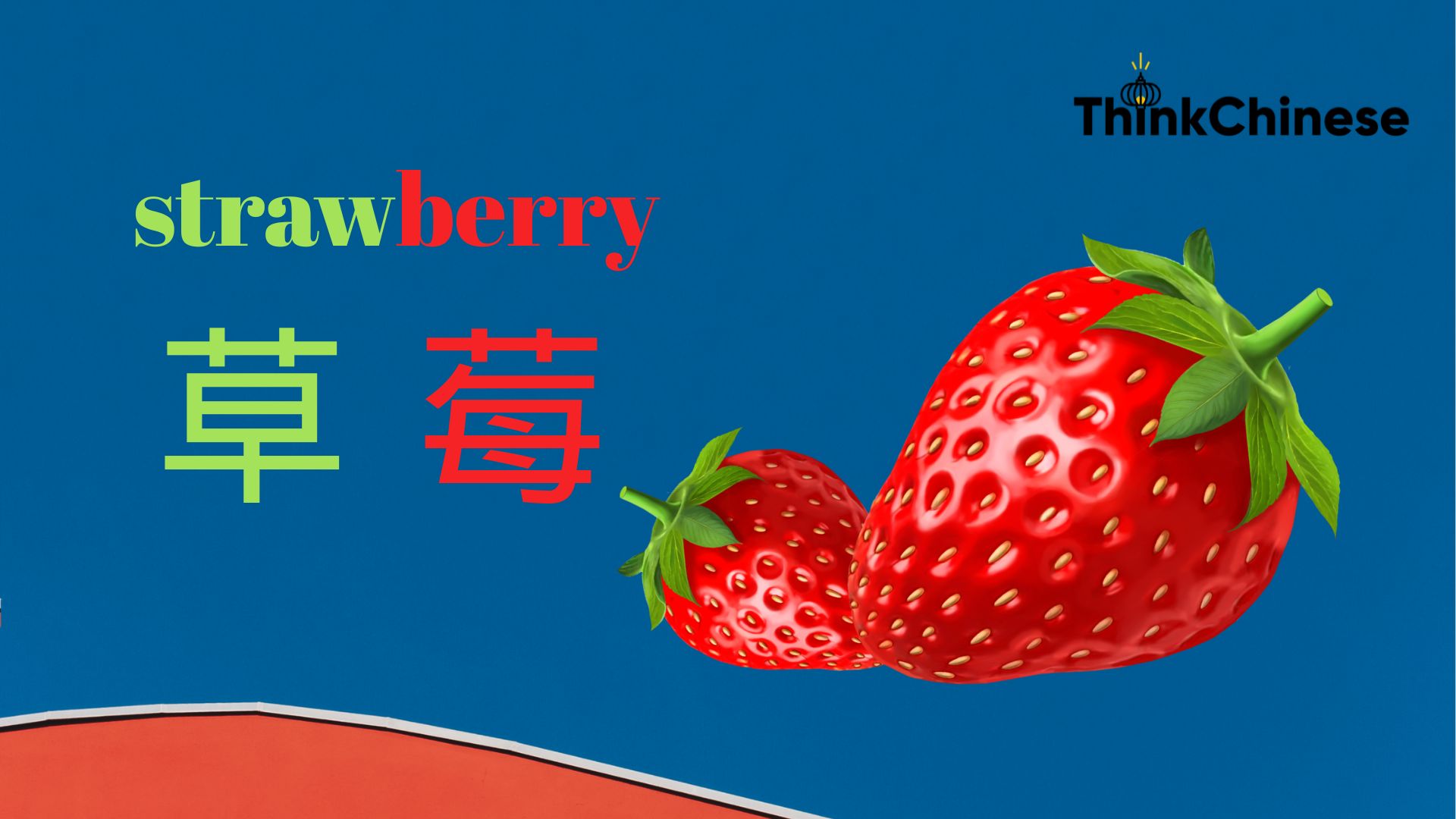
草莓 (cǎo méi) is the Chinese for “strawberry.”
To help you remember:
- 草 (cǎo) means “straw” or “grass”
- 莓 (méi) means “berry”
So in Chinese a “strawberry” is literally a “straw” “berry,” just as it is in English.
Recognising words which map directly to English like this helps us to find common ground and makes what immediately looks strange feel familiar.
The fun thing is that this can also help us to notice things may never have thought about before, even though they have been right in front of us all along. In this case, we are so used to saying “strawberry” as one word in English that we may well never have really made the connection with “straw.”
Similarly:
- Blackberries are 黑莓 (hēi méi – black berries)
- Blueberries are 蓝莓 (lán méi – blue berries)
- Cloudberries are 云莓 (yún méi – cloud berries)
- Gooseberries are 鹅莓(é méi – goose berries)
But what’s a “cran” or a “rasp”? In Chinese:
- Cranberries are 小红莓(xiǎo hóng méi – little red berries) or 蔓越莓(màn yuè méi – creeper berries, because they grow on a creeping shrub)
- Raspberries are 木莓 (mù méi – wood berries) or 树莓(shù méi – tree berries) because they grow on woody stems rather than on herbaceous plants, like strawberries.
When we Think Chinese, not only does vocabulary become easier to learn; we also feel more of a personal connection with the language; and our imagination is stimulated by things we had previously overlooked.
This article is written by Tim Nash @ ZipF