
快乐 (kuài lè) is the Chinese for “happy.”
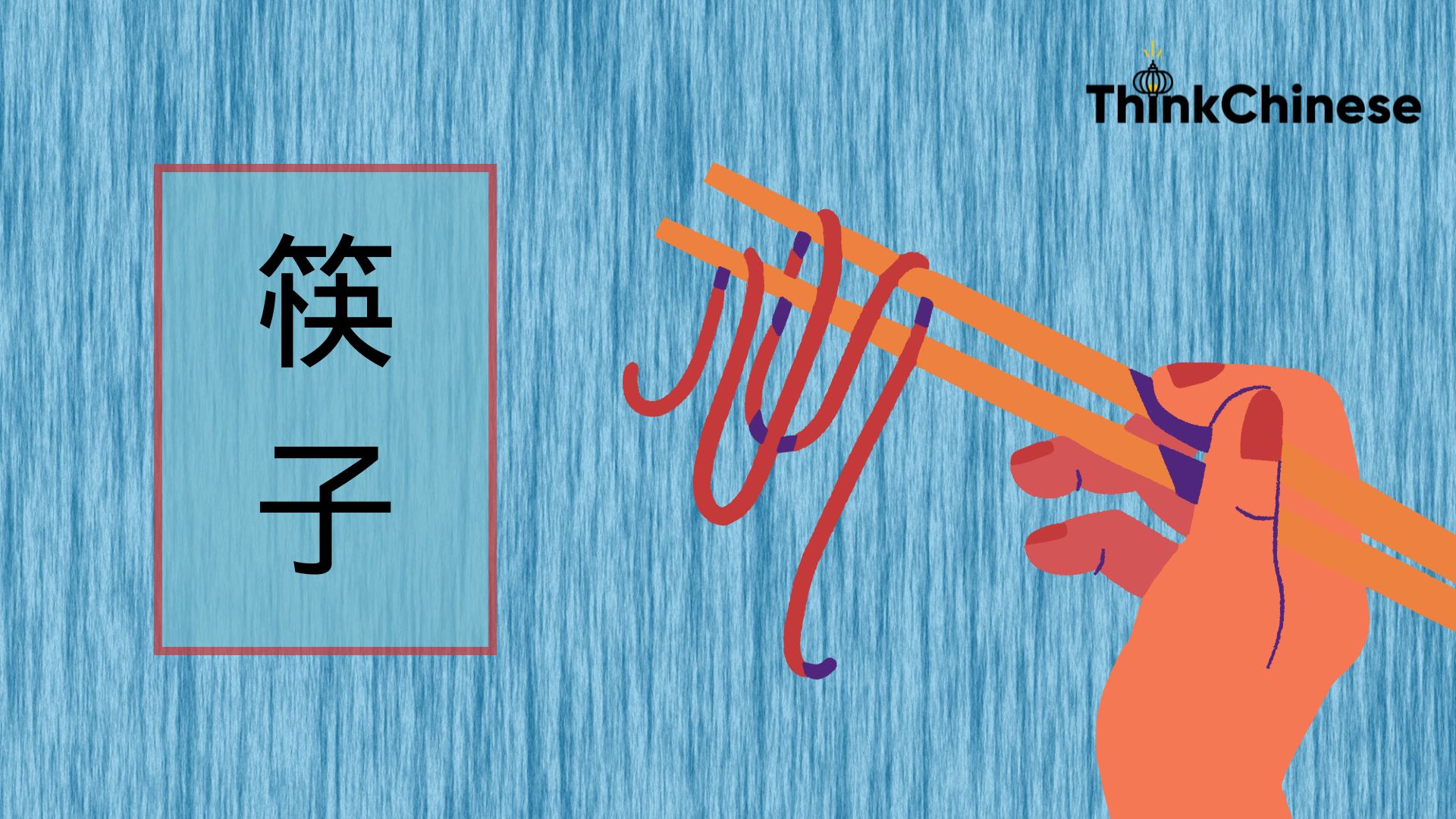
筷子 (kuài zǐ) is the Chinese for “chopsticks.”
Both “happy” and “chopsticks” share the sound “kuài.”
When we’re writing, you can see the difference: 筷 (chopsticks) has the radical for “bamboo” (竹) on top; 快 (happy) does not. But if we say 筷 (chopsticks) and 快(happy), they sound the same. That’s why a nice set of chopsticks is a popular housewarming gift: because it’s like you’re bringing happiness into the new home.
When we’re talking, we usually add a second syllable so you can hear the difference: kuài (chopsticks) and kuài (happy) sound the same, but kuài lè (happy) and kuài zǐ (chopsticks) do not.
If we Think Chinese, we’ll find it super helpful when learning vocabulary. It is much easier to remember new words if we put them into groups that share a common syllable in Chinese than it is to learn words on their own or in topic groups.
For example:
● kuài lè (happy)
● kuài zǐ (chopsticks)
● sān kuài (three pieces)
● kuài jì (accountant)
● kuài diǎn (hurry up)
● bīng kuài (ice cube)
● liáng kuai (cool)
This article is written by Tim Nash @ ZipF